
Water Heater Burst in Garage or Closet? The First 5 Steps to Stop Catastrophic Flooding
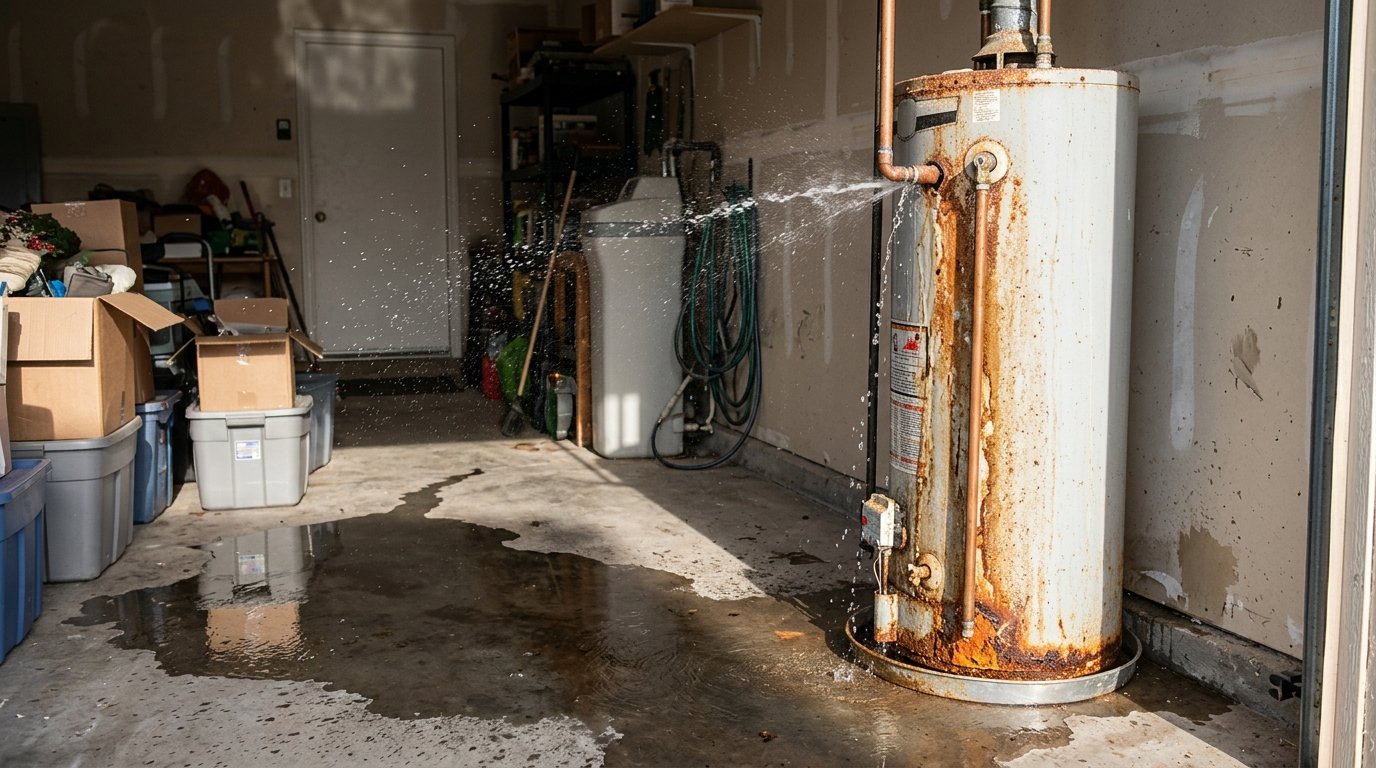
A ruptured water heater is one of the most common plumbing disasters facing homeowners in San Tan Valley. Due to our exceptionally hard water—heavy with dissolved calcium, magnesium, and carbonate minerals—sediment settles into the bottom of hot water tanks, creating localized hotspots that corrode internal glass linings. When a tank bursts, it doesn't just release 40 to 80 gallons of scalding water; pressurized city water continues pumping into your home at 5 to 10 gallons per minute until you intervene.
⚡ Immediate Scalding & Electrical Hazard
Water exiting a ruptured heater can be 125°F to 140°F. Never walk into standing water in a dark utility closet or garage barefoot. Always disconnect power at the main electrical breaker panel before approaching the appliance.
The 5 Immediate Actions to Take When a Water Heater Bursts
Cut the Power Source Immediately
Electric Water Heaters: Go to your circuit breaker box and flip the double-pole 30-amp breaker labeled "Water Heater" to OFF. Heating elements exposed to air will burn out and present an electrical arc risk.
Gas Water Heaters: Turn the thermostat dial on the front of the gas valve to "OFF" or "PILOT" and close the inline gas shutoff handle.
Shut Off the Cold Water Supply Valve
Look at the top of your water heater. There is a cold water inlet pipe with a shutoff valve. If it is a lever ball valve, turn it 90 degrees until perpendicular to the pipe. If it is a round wheel gate valve, turn it clockwise until firmly closed. If the valve is stuck or corroded, shut off your home's main water meter at the street.
Relieve Pressure in Hot Water Lines
Open hot water faucets in an exterior laundry sink or bathtub. This relieves airlock and pressure, helping remaining water drain safely through fixture drains rather than spewing across your garage or hallway flooring.
Contain the Spread into Adjoining Rooms
Most water heaters in San Tan Valley are installed on raised platforms in garages or tucked into interior hallway closets. Water flows downhill underneath drywall baseplates and saturates adjoining bedrooms, living rooms, and hallway carpets. Place barriers or rolled towels at door thresholds to redirect runoff toward exterior garage doors.
Call for Immediate Truck-Mounted Water Extraction
Even if the garage concrete looks dry on the surface, water has already wicked 6 to 18 inches up into drywall, wall studs, and insulation. Call our Local Referral Line immediately for professional thermal moisture mapping and high-power vacuum extraction.
Why San Tan Valley Water Heaters Fail Prematurely
While national water heater lifespans average 10 to 12 years, in San Tan Valley homes, units frequently rupture between years 6 and 8. Here is why:
- Extreme Hardness (15–25 Grains per Gallon): Mineral scale coats the tank bottom, acting as a thermal insulator. The gas burner or electric element must run hotter to heat the water, deteriorating steel welds.
- High Summer Ambient Heat: Garages in San Tan Valley regularly exceed 125°F in July and August, keeping tank components under constant thermal stress.
- Depleted Anode Rods: In hard desert water, magnesium sacrificial anode rods dissolve completely in 24 to 36 months. Once gone, corrosion attacks the steel tank directly.
💡 Hidden Wall Cavity Damage: Don't Rely on Box Fans
Placing household fans in the garage will dry the surface of the drywall paper while leaving wooden 2x4 sill plates and insulation soaking wet inside the wall. Mold begins blooming behind garage drywall in under 48 hours. Professional restorers use non-invasive moisture meters and directed cavity injection drying to save walls.
Addressing Water Heater Burst Damage
Most Arizona homeowner policies follow this standard principle:
- Covered: The resulting "ensuing water damage"—including extraction, drywall removal, carpet drying, structural drying, and drywall rebuild.
- Not Covered: The cost to purchase the replacement water heater unit itself (considered regular maintenance wear-and-tear).
Network specialists provide detailed damage assessments and itemized scopes using standard Xactimate pricing.