
7 Warning Signs of a Hidden Water Leak Behind Drywall in Desert Homes
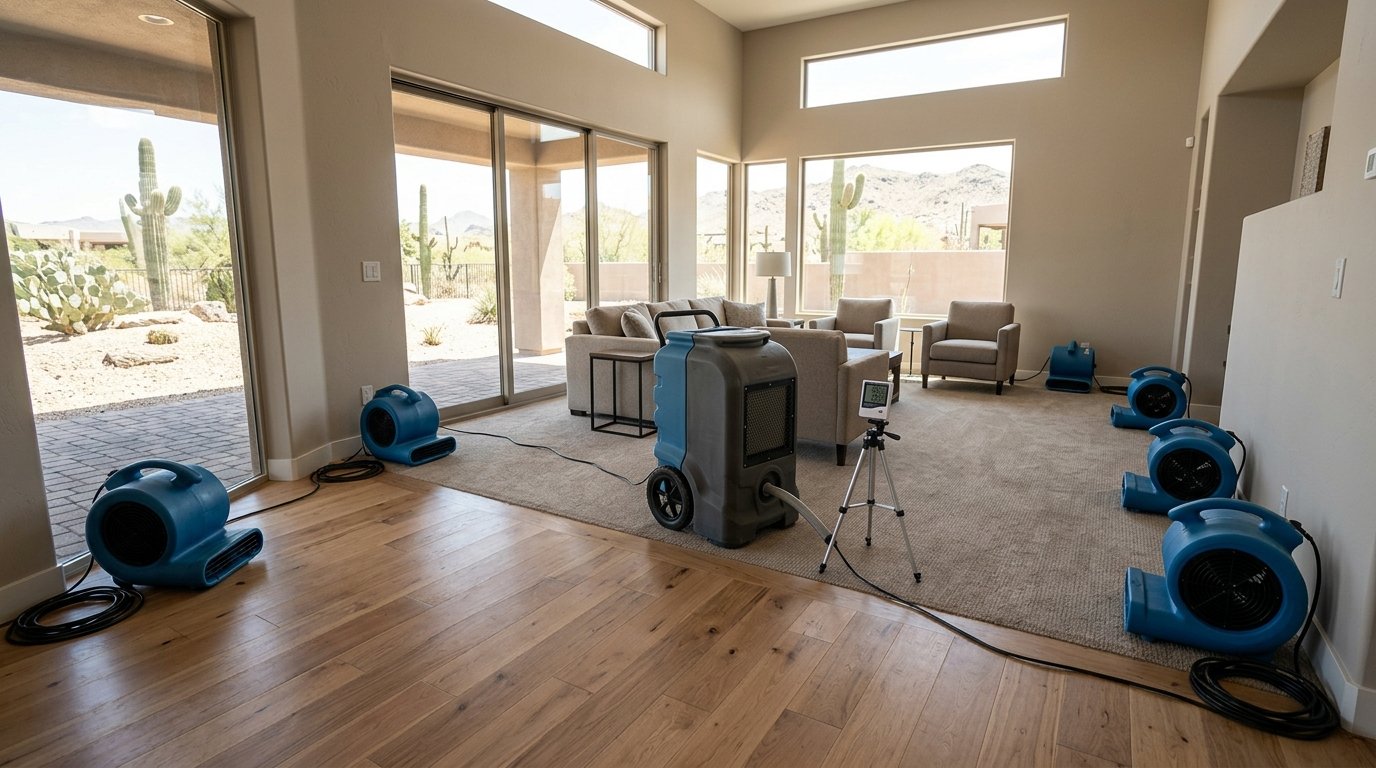
Not all water damage incidents announce themselves with a roaring pipe rupture. In many San Tan Valley homes built between 2002 and 2020, hard mineral scale, galvanic corrosion, or excessive water pressure produce pinhole leaks—microscopic fractures in copper supply lines or CPVC fittings hidden completely behind drywall. These pinholes can mist water for weeks or months inside wall framing before anyone notices, silently rotting wooden studs and multiplying toxic mold.
🔍 The Hidden Enemy: Pinhole Leaks in Wall Cavities
A pinhole leak spraying just a single cup of water per hour will dump over 45 gallons into wall insulation in a month. Because desert fiberglass batt insulation holds water like a sponge against wooden 2x4 framing, structural rot and mold colonization occur invisibly from the inside out.
The 7 Visual and Physical Signs of Hidden Wall Leaks
Peeling, Bubbling, or Flaking Wall Paint
Latex paint on drywall acts like an elastic skin. As moisture accumulates inside the gypsum core, it pushes paint outward, creating soft bubbles, blistering, or peeling strips along hallway and bathroom baseboards.
Warped, Swollen, or Detached Baseboards
Most tract homes in San Tan Valley use MDF baseboards. MDF swells like a sponge when moisture hits it. If your baseboards look warped or are pulling away from the drywall, water is pooling at the bottom plate.
Faint Musty Odors Emanating from Electrical Outlets
Air inside wall voids moves outward through electrical outlet boxes and light switch covers. If you notice a damp, earthy, mushroom-like scent when standing near a wall switch, mold is multiplying in the stud cavity.
Yellowish-Brown Staining on Drywall or Ceilings
Water stains start as subtle light brown rings that expand over time. In two-story homes, stains appearing on ground-floor ceilings often indicate leaking upstairs shower pans, toilet wax rings, or washing machine lines.
Spongy or Squishy Drywall to the Touch
Drywall that has absorbed moisture loses its structural rigidity. Press your thumb gently against suspected areas. If the wall feels soft, pliable, or gives under light pressure, the gypsum has suffered water saturation.
Sudden Indoor Humidity or AC Struggling
If your home feels unusually muggy despite your central air conditioner running constantly, hundreds of pints of evaporated moisture from a hidden leak may be constantly re-entering the indoor air envelope.
Curb Water Meter Moving While No Fixtures Are Running
The definitive test: shut off all faucets, washing machines, and ice makers. Check your municipal water meter dial outside. If the small red triangle or low-flow decimal spins even slightly, a pressurized line is actively leaking.
Common Culprits of In-Wall Leaks in San Tan Valley
- Kitchen Reverse Osmosis (RO) Filter Tubing: Thin 1/4-inch plastic lines under kitchen sinks can kink or crack, spraying mist into drywall backing.
- Refrigerator Ice Maker Lines: Poly tubing behind the fridge gets brittle from motor heat and friction vibrations.
- Shower Mixing Valves: Gaskets behind tile walls degrade, letting water drip behind the fiberglass shower surround during every shower.
- Washing Machine Braided Lines: Vibrations against sheetrock during high-speed spin cycles wear down hose connections.
💡 Non-Invasive Thermal Diagnostics
Connected technicians use FLIR infrared thermal cameras to scan your walls. Water evaporation cools wall surfaces, showing up as a distinct deep blue heat signature on our screens. We can trace the exact pipe leak without breaking down a single sheet of drywall until confirmed.
How We Dry Wall Cavities Without Demolishing Your Home
If detected early, our restoration specialists can often save your drywall using directed heat and cavity injection systems. By removing only the baseboard and drilling small, hidden 1/4-inch holes at floor level, we inject high-velocity dehumidified air directly into the stud cavity, drying framing back to dry standard without expensive remodeling.