
Monsoon Flash Flooding in San Tan Valley: Immediate Steps When Water Enters Your Home
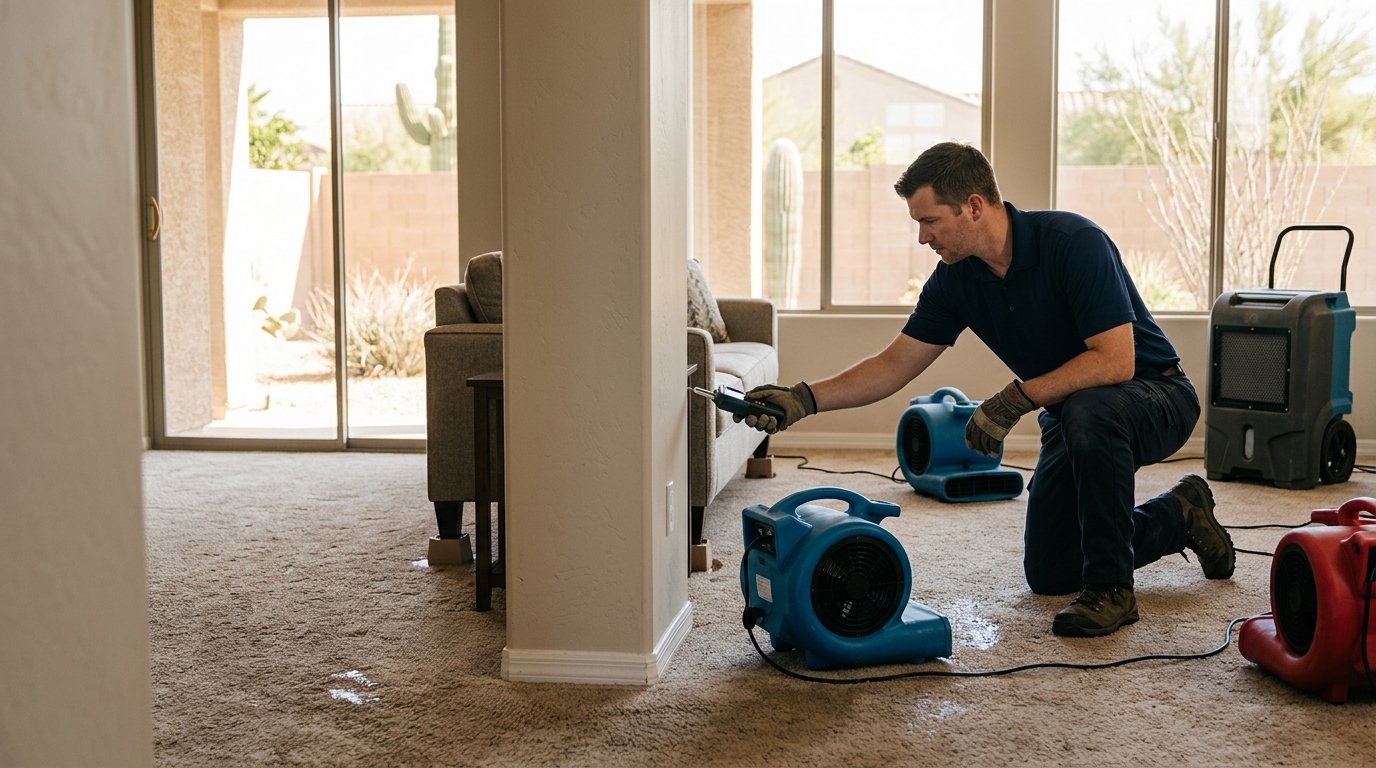
Between July and September, the Arizona monsoon season unleashes dramatic dust storms followed by torrential desert downpours. In San Tan Valley, where soil consists largely of impenetrable clay and caliche, ground absorption is nearly zero. Heavy rainfall pools in backyards within minutes, easily cresting patio sliders, garage thresholds, and weep screeds. If storm floodwater has entered your home, immediate action within the first few hours is essential to prevent permanent structural rot and dangerous microbial outbreaks.
🚨 Biohazard Alert: Storm Floodwater is Category 2 or 3
Unlike a clean sink supply line, outdoor stormwater carries lawn fertilizer, pest control chemicals, desert bacteria, animal feces, and fine desert silt. Under industry structural drying guidelines, flood water that enters from the ground level is classified as contaminated and must never be handled without proper antimicrobial sanitization.
The First 4 Restoration Steps When Storm Water Enters Your Living Space
Cut Off Electricity to Flooded Zones
Electrical safety is your primary priority. If standing water touches low outlets, baseboard heaters, or appliances, DO NOT step into the water. Head to your electrical breaker panel and trip circuits supplying power to the submerged rooms.
Erect Sandbags or Divert Exterior Runoff
While storms rage, use sandbags, plastic sheeting, or heavy towels to block further water entering sliding glass doors and entryway sweeps. If safe, dig a quick trench or clearing away mulch blocking yard drains.
Elevate Valuable Furnishings & Electronics
Place wooden furniture feet onto aluminum foil squares or plastic lids to prevent wood stain from bleeding permanently into carpeting. Move floor rugs, power strips, and low-lying electronics to high countertops.
Call for Truck-Mounted High-Volume Water Extraction
Household shop vacs hold only 5 to 10 gallons and exhaust humid, spore-laden air directly into your home. Professional truck-mounted vacuums extract hundreds of gallons of deep saturation out of carpets, pads, and concrete within minutes.
Why Desert Monsoons Create Rapid Mold Incubators
Homeowners often believe Arizona's arid reputation protects them from mold. However, during a summer monsoon, outdoor temperatures remain in the high 90s or low 100s, while indoor air conditioners run constantly. When rainwater soaks into drywall, the cool interior air and warm saturated wall cavities create the exact tropical conditions needed for mold spores to germinate within 24 to 48 hours.
Professional Monsoon Flood Restoration Protocol
When truck-mounted extraction units arrive at your San Tan Valley residence, experienced technicians execute a scientific drying strategy:
- Thermal Imaging Assessment: We scan baseboards and drywall to determine exactly how high water wicked up wall framing.
- Deep Water Extraction: High-powered extraction heads pull standing water and silt out of floor coverings and subfloors.
- Controlled Flood Cuts: Saturated drywall and wet fiberglass batt insulation are cleanly removed 12 to 24 inches above the moisture line to dry wall cavities.
- Antimicrobial Fogging: EPA-registered botanical disinfectants neutralize storm bacteria and fungi.
- Industrial Dehumidification: Low-grain refrigerant (LGR) dehumidifiers pull moisture out of the air and structural framing down to dry standard levels.
💡 Documenting Storm Damage
Before any damaged items are hauled away, take high-resolution photos and wide-angle video showing the water line against baseboards, damaged furniture labels, and serial numbers. Connected specialists provide computerized thermal mapping logs to document exact moisture spread.
Neighborhood Vulnerabilities Across San Tan Valley
Different subdivisions in San Tan Valley face distinct monsoon challenges:
- San Tan Valley Foothill Areas: Sloping foothills direct flash runoff quickly toward homes backing onto desert washes.
- San Tan Valley Basin Areas: Flat topography and heavy clay soil lead to prolonged backyard pooling against rear patio slabs.
- San Tan Valley Ranchettes & Acreage Lots: Open desert ditches frequently overflow into detached garages and workshops.