
How to Detect a Slab Leak in San Tan Valley: 6 Warning Signs Under Concrete Foundations
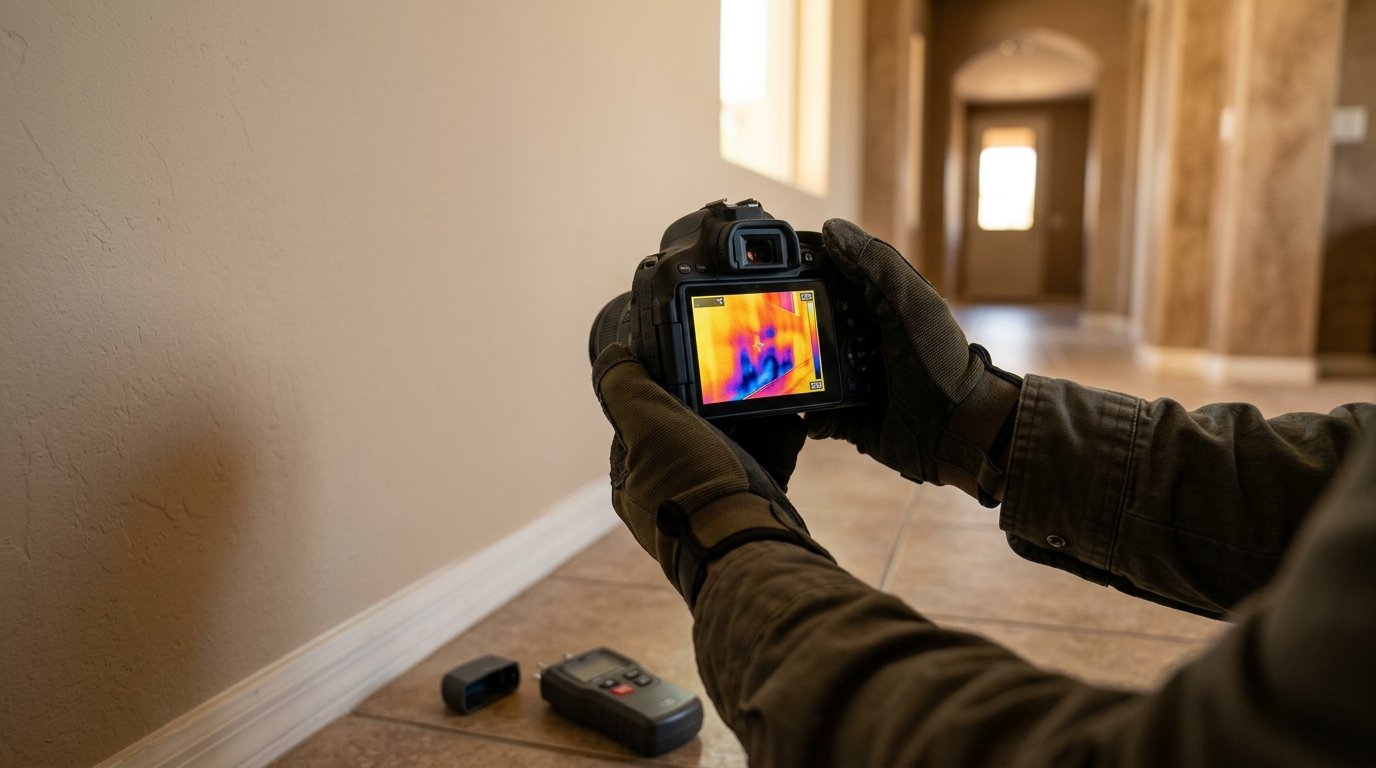
Most residential homes constructed in San Tan Valley over the past 25 years sit on post-tension concrete slab foundations. Pressurized copper water supply lines run directly beneath or within these slabs. When a pipe develops a pinhole fracture or burst seam under the concrete, it is called a slab leak—and if left undiscovered, it can compromise foundation integrity, warp flooring, and trigger massive black mold growth behind your walls.
⚠️ Why Desert Slab Leaks Require Immediate Action
In San Tan Valley, high soil mineral content and clay expansion accelerate copper pipe pitting. A small slab leak running at just 2 gallons per minute wastes over 2,800 gallons a day into the soil and foundation bedding, destabilizing your home's post-tension slab.
6 Key Warning Signs of a Slab Leak in Your Home
Because the leak is buried under 4 to 6 inches of concrete, water rarely shoots straight up into the air immediately. Instead, look for these subtle symptoms:
Noticeable Warm Spots on the Floor
If you walk barefoot across your tile, luxury vinyl plank, or carpet and feel a localized warm patch that stays warm regardless of room temperature, a hot water line has likely burst directly underneath that slab section.
The Sound of Running Water When All Taps Are Off
Late at night when the house is silent, listen near hallway baseboards, utility closets, or bathroom walls. If you hear a faint hissing, rushing, or gurgling sound without any appliance running, pressurized water is escaping under the slab.
Water Meter Spinning Continuously
Turn off every sink, shower, washing machine, and irrigation valve in your home. Go to your water meter box at the curb. If the small low-flow indicator dial (or digital reading) continues to spin or register flow, you have an active leak on your property line.
Unexplained Spikes on Your Water Utility Bill
Did your monthly EPCOR or Johnson Utilities water bill spike dramatically without filling a swimming pool or extra landscaping irrigation? A buried pipe fracture will continuously siphon city water.
Damp Carpeting, Buckled Vinyl, or White Efflorescence on Grout
As water builds hydrostatic pressure under the concrete, moisture migrates upward through micro-pores in the slab. You may notice darkening grout lines, chalky white powder (mineral efflorescence), or warped baseboards along perimeter walls.
Musty Odors or Unexplained Humidity Indoors
Desert homes are normally dry. If entering a hallway or guest bedroom greets you with an earthy, damp cellar smell, mold colonies may already be feeding on the wet drywall gypsum and tack strips.
How Experienced Technicians Pinpoint Leaks Without Demolition
In years past, locating a slab leak meant breaking up dozens of square feet of tile with a sledgehammer based on guesswork. Today, independent restoration specialists utilize non-invasive electronic diagnostics:
- FLIR Thermal Imaging Cameras: Detect subtle infrared heat anomalies emitted through tiles and concrete pads.
- Electronic Acoustic Listening Sensors: Amplify subterranean water hiss frequencies down to inches of precision.
- Penetrating Non-Invasive Moisture Meters: Measure structural moisture saturation percentages in wood framing and subfloors.
💡 Damage Prevention Tip: Know Your Main Shutoff Valve
Every San Tan Valley homeowner should know where their main brass gate or ball shutoff valve is located—typically near the hose bib on the exterior front wall or garage. If you suspect a major leak, turn this lever 90 degrees clockwise immediately to stop water flow.
The Danger of Waiting: Post-Tension Slabs and Expansive Soils
San Tan Valley soil contains dense clay deposits that expand dramatically when saturated and shrink when dry. When a slab leak saturates the subsoil on one side of your house, the soil heaves upward, causing unequal foundation pressure. This can bend post-tension steel cables, crack load-bearing drywall, and cause doors and windows to stick shut.
What to Do Next If You Suspect a Slab Leak
- Turn Off Main Water: Stop water from saturating your structural framing.
- Call for Non-Invasive Moisture Mapping: Reach our local referral line for thermal scanning.
- Isolate Wet Flooring: Prevent family members and pets from walking on damp electrical zones.
- Document the Damage: Take clear photographs and video of damp baseboards and meter readings for property records.